
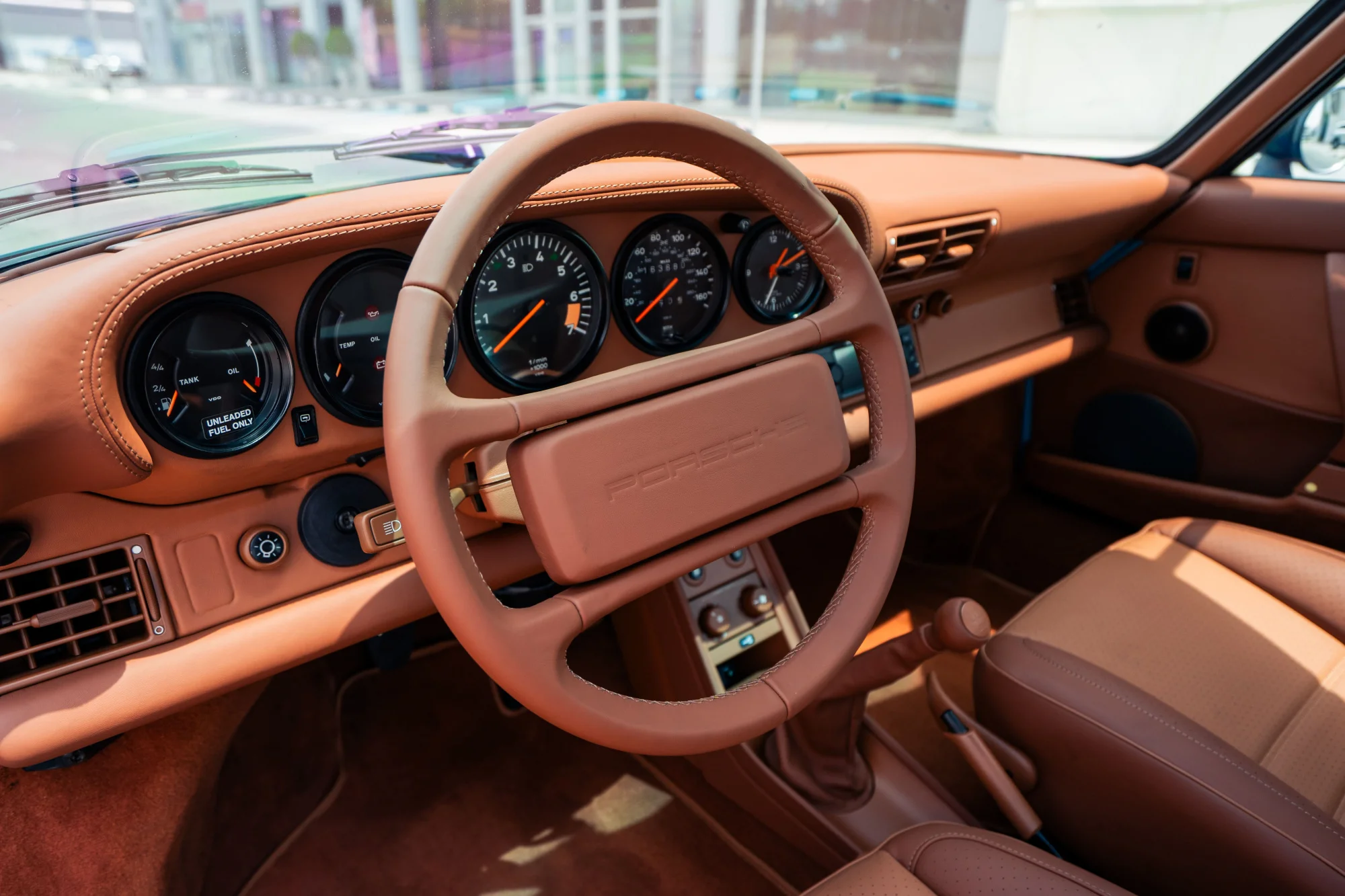
Customising the interior of a Porsche or Ferrari involves more than choosing leather, colours and stitching. Seats, trim panels and steering wheels can contain airbags, sensors, wiring and other integrated systems, while Dubai’s heat and UV exposure place additional demands on interior materials.
Before approving a project, owners should understand exactly which components will be changed, which materials will be used and how original functions will be preserved.
In this article, the experts at DEIZ GARAGE explain what Porsche and Ferrari owners should check before ordering interior customisation in Dubai, from material samples and project specifications to safety systems, workmanship and final inspection.
What an interior order includes and what it does not
An interior-customisation order covers defined work inside the cabin. It can include seats, door panels, a central console, dashboard, steering wheel, headliner, carpets, trim, and selected controls or decorative finishes.
Full Interior Reupholstery, also called interior retrim, means a complete interior rebuild involving seats, door panels, steering wheel, headliner, and trim. It shouldn't be quoted as a vague "full interior" package. The written scope needs to name every affected component.
Interior customisation is separate from Detailing, Wrapping & PPF, and mechanical maintenance. Detailing cleans and protects existing surfaces. Wrapping changes exterior appearance or protection. Maintenance concerns servicing and mechanical condition. One business may offer all three, but the work orders are different.
Changes that need written scope
Record these requests before the workshop prices the work:
- Reupholstery of seats, door panels, dashboard, or headliner.
- Changes to stitching colour, piping, embroidery, perforation, or quilting.
- Replacement or refinishing of trim, including carbon, painted, wood, aluminium, or other decorative finishes.
- Steering-wheel retrim where controls, heating, or airbags are present.
- Changes around seat-mounted components, seat adjustment controls, wiring, sensors, or connectors.
- Removal, storage, replacement, or return of original components.
A seat cover can look like a purely aesthetic change. It becomes technical once it involves seat-mounted airbags, occupancy sensors, seat controls, or electrical connections. That difference determines what the owner must ask before approval.
Pre-order checklist for Porsche and Ferrari interior work
Before approving interior work, provide the workshop with the vehicle model, model year, current interior configuration and photographs. Clearly define which components will be changed, the preferred materials, colours and stitching, and which original parts should remain.
If the work involves seats, the steering wheel, dashboard or other areas containing airbags, sensors or wiring, confirm how these systems will be handled. Warranty implications should also be checked with an authorised dealer where necessary. Finally, agree on the price, timeline and approval process for any changes before work begins.
Build the interior specification before requesting a quote
A detailed interior specification turns preference into an approval document. It protects the owner and workshop because the quote can be checked against named materials, components, and finishes instead of a mood board.
"Black leather with red stitching" isn't enough for a reliable quote. It leaves the leather grade, grain, panel layout, thread shade, stitching pattern, perforation, trim finish, and treatment of original components unanswered. Small omissions stack up quickly, like ordering a suit without discussing the lining, buttons, or cut.
| Specification field | What the document should state | Approval status |
|---|---|---|
| Interior element | Seat centres, bolsters, door panels, dashboard, central console, headliner, steering wheel, carpets, trim | Approved / excluded |
| Material | Exact material name, colour, texture, backing where relevant, and physical material sample reference | Approved sample attached |
| Stitching | Thread colour, stitch type, contrast or matching finish, pattern, and panel location | Approved visual reference |
| Trim | Decorative finish, colour, weave, gloss level, and which pieces are retained or changed | Approved sample or photograph |
| Original components | Parts to be retained, returned, stored, replaced, or refinished | Written instruction |
| Safety-sensitive areas | Seat-mounted components, steering-wheel airbag area, sensor zones, wiring, connectors, and switches | Technical review required |
| Revisions | Who may approve changes, how the change is recorded, and effect on price or completion timing | Written approval only |
Material substitutions need a written rule
A material substitution shouldn't arrive as a quick message saying "closest available". The workshop should provide a replacement material sample. It should explain the visual and practical difference, state any price or timing effect, and obtain approval before installation.
Appearance and performance are related, but they aren't the same thing. A trim may match the approved colour yet wear, clean, or age differently from the selected material.
Check interior materials and samples for Dubai conditions
For a Porsche or Ferrari used in Dubai, approve materials from physical samples. Assess heat exposure, UV exposure, colour stability, wear, cleanability, and feel. A phone photograph can't show surface temperature, texture, sheen, backing, or how colour shifts in strong daylight.
A material sample is a physical swatch used to verify both appearance and performance before installation.
Dubai conditions affect an interior through high cabin temperatures, intense daylight, dust, and frequent cleaning. Dark surfaces, highly textured finishes, pale colours, and delicate decorative materials can each require different care decisions. The right choice depends on parking, use, and which areas receive direct sun or regular contact.
| Sample check | What to inspect | Written question for the workshop |
|---|---|---|
| Colour stability | Compare the sample in daylight and shade against existing cabin surfaces | How does this material retain colour under repeated UV exposure? |
| Heat response | Handle the sample after warm exposure where possible and compare surface feel | Is this material suitable for areas exposed to direct sun through the windscreen or roof glass? |
| Wear resistance | Examine grain, coating, edges, perforation, and contact points | Which areas of this interior are most likely to show contact wear? |
| Cleanability | Ask which approved cleaning method applies to the exact material | What products or methods should not be used on this surface? |
| Dust visibility | Check texture, weave, perforation, and colour under strong light | Will dust collect in the material texture or be difficult to remove? |
| Match to original cabin | Place the sample beside existing leather, trim, carpet, and stitching |
Does the proposed material match the retained original components? |
Compare samples in the actual cabin
Place the material sample beside the original leather, trim, carpet, and stitching that will remain. Review it in daylight, not only under workshop lighting. Check sheen as well as colour. A glossy finish beside a matte original component can look wrong even when the shade is close.
What about a material photo? Useful for early discussion, nothing more. A photograph isn't a material sample.
If the selected material is unavailable, the workshop should document the replacement sample, revised specification, price effect, and timing effect. No approval, no substitution.
How to choose a workshop for Porsche or Ferrari interiors
Choose a workshop by comparing marque-specific project evidence, technical process, communication, and written scope against the same interior specification. Portfolio images alone don't show how a business handles original parts, safety-sensitive components, or project changes.
Ask for relevant Porsche or Ferrari interior examples. Keep the request narrow. Ask about comparable seats, steering wheels, dashboards, trim, or cabins requiring a similar level of disassembly. Finished stitching shows finish quality. It doesn't prove technical handling.
| Workshop comparison point | Evidence to request | What it tells you |
|---|---|---|
| Porsche or Ferrari experience | Documented examples of comparable interior work | Whether the workshop has handled similar components and configurations |
| Customer feedback | Reviews describing communication, finish, timing, and issue resolution | How owners experience the business after work begins |
| Inspection process | A stated inspection and diagnostics stage before disassembly | Whether the existing condition is recorded before changes are made |
| Project plan | Clear scope, estimate, and timeline | Whether the workshop can explain the work before requesting approval |
| Production process | Production, installation, and finishing stages | Whether the work follows a stated process rather than being improvised |
| Handover | Quality control and delivery briefing | Whether final inspection is included in the job process |
| Storage and parts handling | Written approach to removed parts, labelling, storage, and return | Whether original components can be traced during the project |
DEIZ GARAGE states that it does not outsource to contractors and keeps work under one roof. Owners comparing any workshop can turn that into a direct question. Who will disassemble, upholster, refit, inspect, and communicate during the project?
Qualifications matter when they connect to the proposed work. Ask which training, certifications, or documented technical experience applies to the components being touched. A generic upholstery qualification and experience around seat wiring aren't the same evidence.
Confirm the workshop's approach to safety systems
Before any interior disassembly, the workshop should explain how it identifies and protects airbags, sensors, seat systems, wiring, connectors, switches, and related components. Don't approve seat, steering-wheel, dashboard, or console work without technical confirmation of the planned process.
Safety systems may sit behind parts that appear decorative. Seats can contain airbags, occupancy-related components, adjustment systems, and wiring. Steering-wheel work can involve airbag areas and controls. Dashboard and console work can sit near electrical connections, screens, switches, or sensors.
Questions that need direct answers
- Will the work require removal of seats, steering wheel, dashboard panels, console panels, or trim around electrical components?
- Which airbags, sensors, seat systems, connectors, or wiring may be present in the work area?
- How will the workshop identify components before removal and refitting?
- Who performs technical work around safety-sensitive parts?
- What function checks will be completed before handover?
- Which proposed changes require additional technical confirmation before approval?
The workshop should explain its process in plain language. If the explanation stays vague, stop there. "We've done plenty" isn't a process.
Safety-system risk rises when an aesthetic request requires access behind trim or inside a seat. Because of that connection, technical confirmation should be a pre-order condition. It isn't an optional extra.
Clarify warranty and servicing implications before work starts
Ask an authorised Porsche or Ferrari dealer for vehicle-specific guidance before approving modifications that may affect future warranty discussions, diagnostics, servicing, or repairs. There is no universal answer. The position depends on the vehicle, modification scope, affected component, and dealer assessment.
Provide the authorised dealer with the vehicle model, model year, VIN where requested, current configuration, proposed interior specification, and a clear description of planned work. Include work around seats, steering wheel, dashboard, trim, wiring, switches, sensors, or airbags.
Ask these questions in writing:
- Could the proposed work affect future diagnostics or repair access?
- Are there components the authorised dealer recommends leaving unchanged?
- What records should be retained for future service visits?
- Should original parts be kept, and if so, which ones?
- Is there information the workshop should provide after completion?
Keep the dealer response, signed interior specification, quote, material approvals, photographs, and workshop correspondence with the vehicle records. Future servicing depends on accurate information about what changed and who carried out the work.
A workshop warranty and a manufacturer warranty are different matters. Ask the workshop for the exact warranty terms that apply to the proposed interior work. Keep those terms with the signed order, along with the authorised dealer's written response.
Does interior customisation automatically void a warranty?
No universal rule applies. The authorised Porsche or Ferrari dealer should clarify the position for the specific vehicle and proposed modification scope.
Approve the order and prepare for final handover
Approve the order only when the signed interior specification, quote, material samples, safety-system approach, change process, and handover checks agree. At handover, compare the completed cabin with the same document used to approve the work.
| Approval stage | Document or action | Owner's check |
|---|---|---|
| Before work | Signed interior specification and quote | Every included and excluded item is clear |
| Before disassembly | Material sample approval and safety-system discussion | The selected materials and technical approach are documented |
| During work | Written approval for substitutions or scope changes | No revised material, price, or timing is accepted verbally |
| Before handover | Quality-control review and delivery briefing | The workshop explains what was completed and what records are supplied |
| At handover | Acceptance checklist | The cabin matches the approved specification and agreed functions are checked |
Acceptance checklist for the final inspection
Check the vehicle in good light before leaving the workshop.
- Compare colour, texture, stitching, trim, and panel layout with the signed specification.
- Review seams, edges, fitment, alignment, and transitions between new and retained original components.
- Confirm that no unapproved material substitution has been made.
- Check agreed seat functions, switches, screens, controls, and lighting before acceptance.
- Ask for records covering the completed scope, approved revisions, care guidance, and workshop warranty terms.
- Confirm which original parts were returned, retained, or stored.
A final inspection is the point at which the completed work is checked against the signed interior specification.
FAQ about ordering a Porsche or Ferrari interior in Dubai
Do I need a written interior specification before requesting a quote?
Yes. A written interior specification lets the workshop price the same scope you intend to approve. It reduces disputes over materials, trim, retained components, and revisions.
What material evidence should I request from a workshop?
Request physical material samples, not only photographs. Review colour, sheen, texture, wear points, cleanability, and how each sample matches original cabin components that will remain.
Why do Dubai conditions matter when choosing interior materials?
Heat, UV exposure, dust, and frequent cleaning can affect colour stability, surface feel, wear, and maintenance needs. Material appearance doesn't guarantee material performance.
What should I ask before seat or trim work begins?
Ask which airbags, sensors, seat systems, wiring, connectors, switches, or controls may be affected. Ask who handles them and what function checks will be completed before handover.
Who should clarify warranty and servicing implications?
An authorised Porsche or Ferrari dealer should clarify implications for the specific vehicle and proposed modification scope. Keep the response with the workshop documents.
What should I check before final handover?
Check the completed cabin against the signed interior specification. Inspect workmanship in good light, confirm agreed functions, review revisions, and collect all records.
What to expect when booking Full Interior Reupholstery
To book Full Interior Reupholstery with DEIZ, send the vehicle model, model year, current interior photographs, the requested scope, reference images, and any material or colour preferences. Include details of existing alterations and identify components that must remain original, be returned, or be stored.
DEIZ should confirm the scope through an inspection, estimate, and timeline, then align the proposed materials and physical samples with the approved interior specification. Any uncertainty around trim, stitching, retained components, or material availability should be resolved before work is authorised.
Before disassembly, approve the signed specification, quote, material samples, safety-system approach, and change-approval process. During the project, any revision to materials, scope, price, or timing should be recorded in writing.
At handover, expect quality control and a delivery briefing. Check the completed cabin against the signed interior specification, confirm agreed functions before leaving, and retain the quote, approved revisions, material information, care guidance, and warranty terms with the vehicle records.
